Beijing attractions itinerary: what is worth your time
Beijing is not a city to conquer with a 25-stop checklist. Its best days have one real commitment, one nearby counterpoint, and enough empty space to notice where you are.
The imperial core
Choose this part of Beijing when you want the city’s grandest historical ideas to make sense in physical space. Do not try to complete it all in a single day.
The Forbidden City
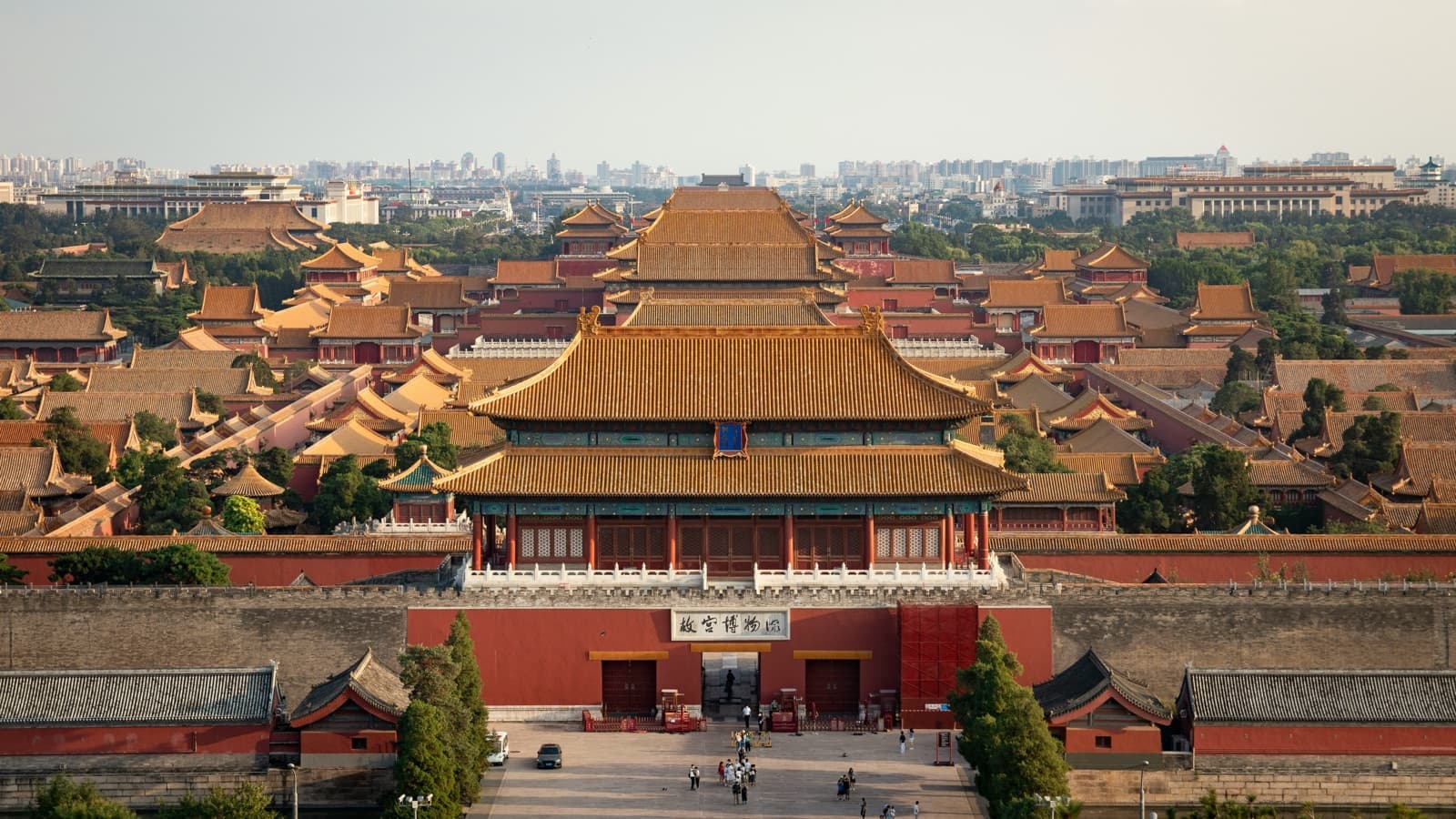
Start here if this is your first Beijing visit
At the heart of Beijing’s Central Axis, the Forbidden City was the imperial palace of the Ming and Qing dynasties. Its vast sequence of formal courtyards, red walls, yellow-glazed roofs, and strictly symmetrical layout made the political order of the court visible in architecture. Today the Palace Museum brings the buildings and a major collection of imperial paintings, ceramics, jade, and other objects together in one place.
Our advice
Book before you build the day around it, then enter through Meridian Gate and work north. Keep your afternoon deliberately small: the palace is the event, not the warm-up.
Pair it with: Pair it with Jingshan Park immediately afterwards, while the north gate is still useful to you.
Time: Allow 4–5 hours, plus the time to reach the correct gate.
Plan this stop
Use the official Palace Museum booking service and bring the passport used for the reservation.
Jingshan Park
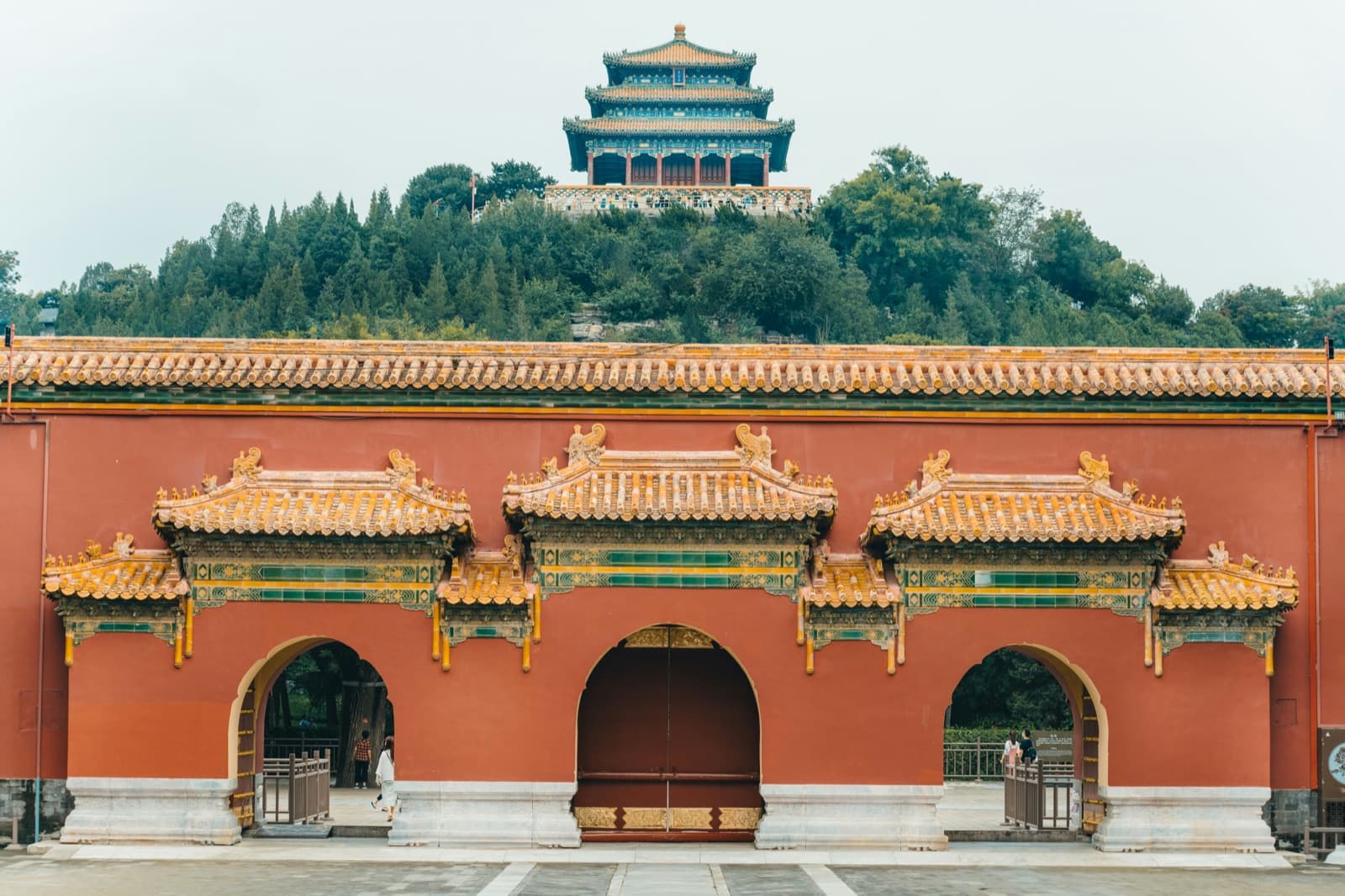
The right ending for a Forbidden City day
Immediately north of the Forbidden City, Jingshan was the imperial garden of the Yuan, Ming, and Qing courts. Its central hill was once the highest point in old Beijing, and the five pavilions on its ridge still frame a rare view over the palace roofs and the city’s north–south axis. It is a small park with an unusually big payoff: this is where Beijing’s planned geometry becomes easy to see.
Our advice
Do not save it for a separate day. Come straight through after the Forbidden City, carry water for the climb, and let the view be the full stop on your palace visit.
Pair it with: Do it after the Forbidden City, not as a separate cross-city trip.
Time: Allow 45–75 minutes, including the climb and a pause at the top.
Plan this stop
Jingshan is one of Beijing’s municipal parks. Check the official park service for the current entry arrangement.
Temple of Heaven
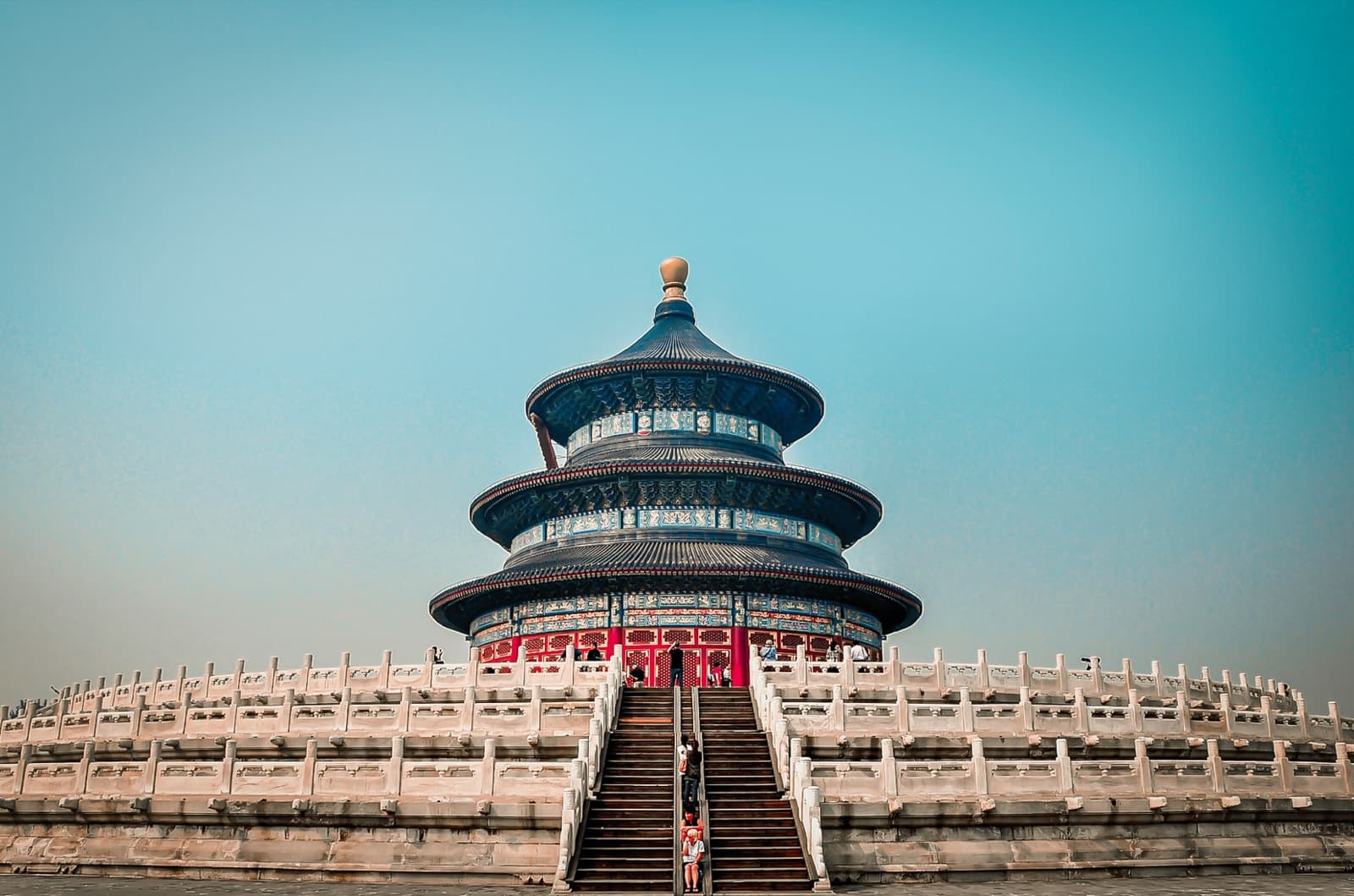
For architecture with room to breathe
Built in 1420, the Temple of Heaven was where Ming and Qing emperors performed ceremonies connected to harvests and the relationship between heaven and earth. The circular Hall of Prayer for Good Harvests, with its deep-blue tiled roof, is its best-known landmark, but the complex also includes the Circular Mound Altar and the Imperial Vault of Heaven. Its long, ordered spaces make this feel less like a single building and more like a ceremonial landscape.
Our advice
Go earlier than you think you need to. Start with the main hall, then stay in the park long enough for the place to feel less like a photo stop and more like a landscape.
Pair it with: Keep the rest of the day light, or continue south toward Qianmen rather than crossing back to the palace district.
Time: Allow 2–3 hours for the grounds and the principal halls.
Plan this stop
The official park site has ticket information. Foreign visitors can also use the park’s official WeChat ticketing route or ask at the service counter.
A city walk through water and hutongs
These places form a good city walk when you want to see water, lanes, gardens, and everyday neighbourhood life rather than another palace complex. Walk them in the order that suits your day; they are a route, not a checklist.
Shichahai
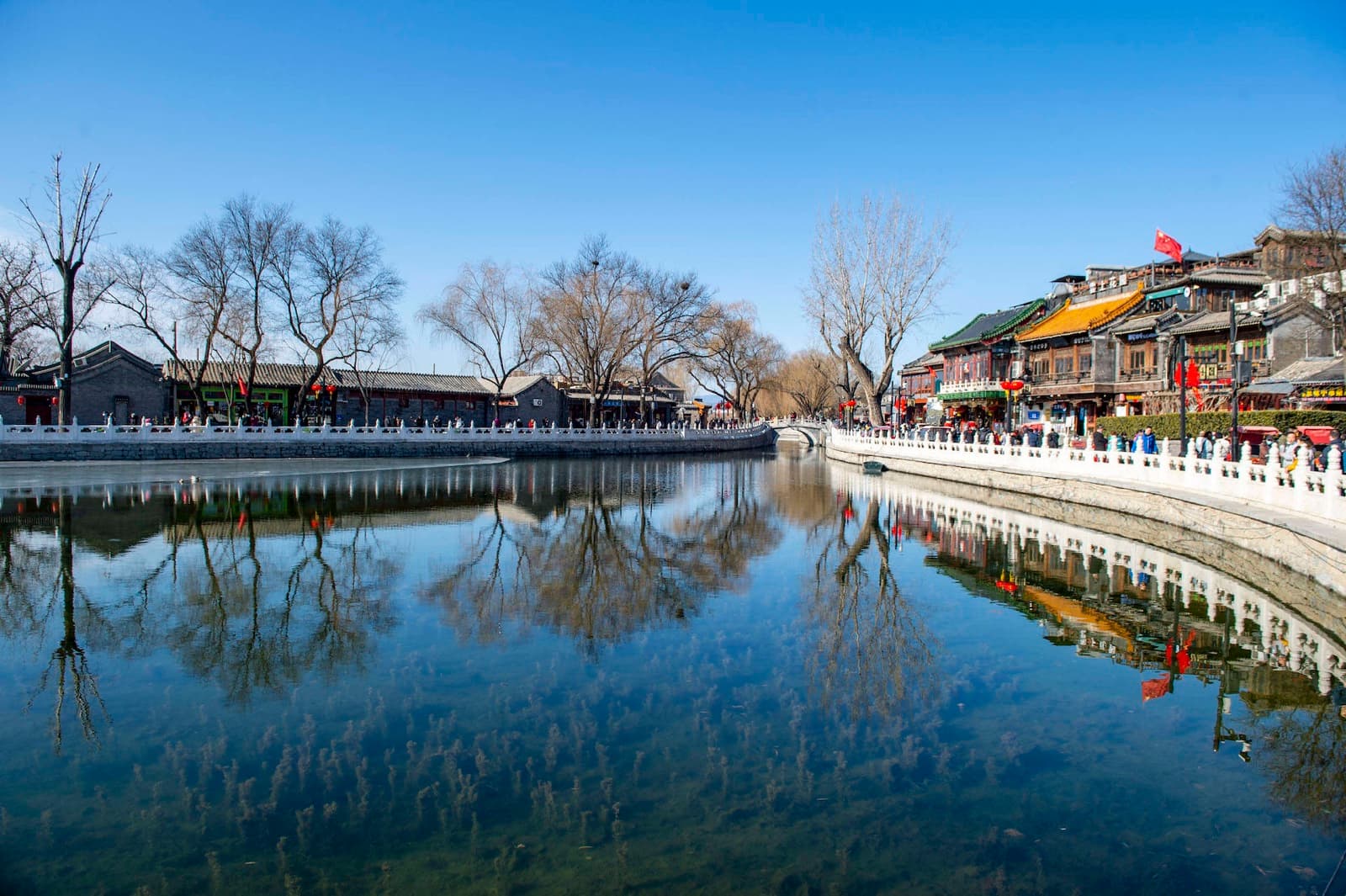
For water, lanes, and a slower old-city rhythm
Shichahai is a historic lakeside area just west of the Drum Tower, made up of Qianhai, Houhai, and Xihai and the narrow lanes around them. For centuries, this part of the city connected waterways, residences, temples, and small businesses; today it is one of the most accessible places to see Beijing’s low-rise, waterside character. The water, willow-lined banks, bridges, and old lanes are the point—not a single landmark to rush through.
Our advice
Start around the Drum Tower and walk west toward the water in the late afternoon. It can be busy by the lakeside, so use the smaller streets as your escape route rather than trying to follow a fixed circuit.
Pair it with: Begin at the Drum and Bell Towers, then continue along the lake before dinner.
Time: Allow 1½–2 hours at a walking pace.
Plan this stop
Shichahai is an open neighbourhood rather than a ticketed attraction; individual venues set their own hours and entry rules.
Nanluogu Xiang
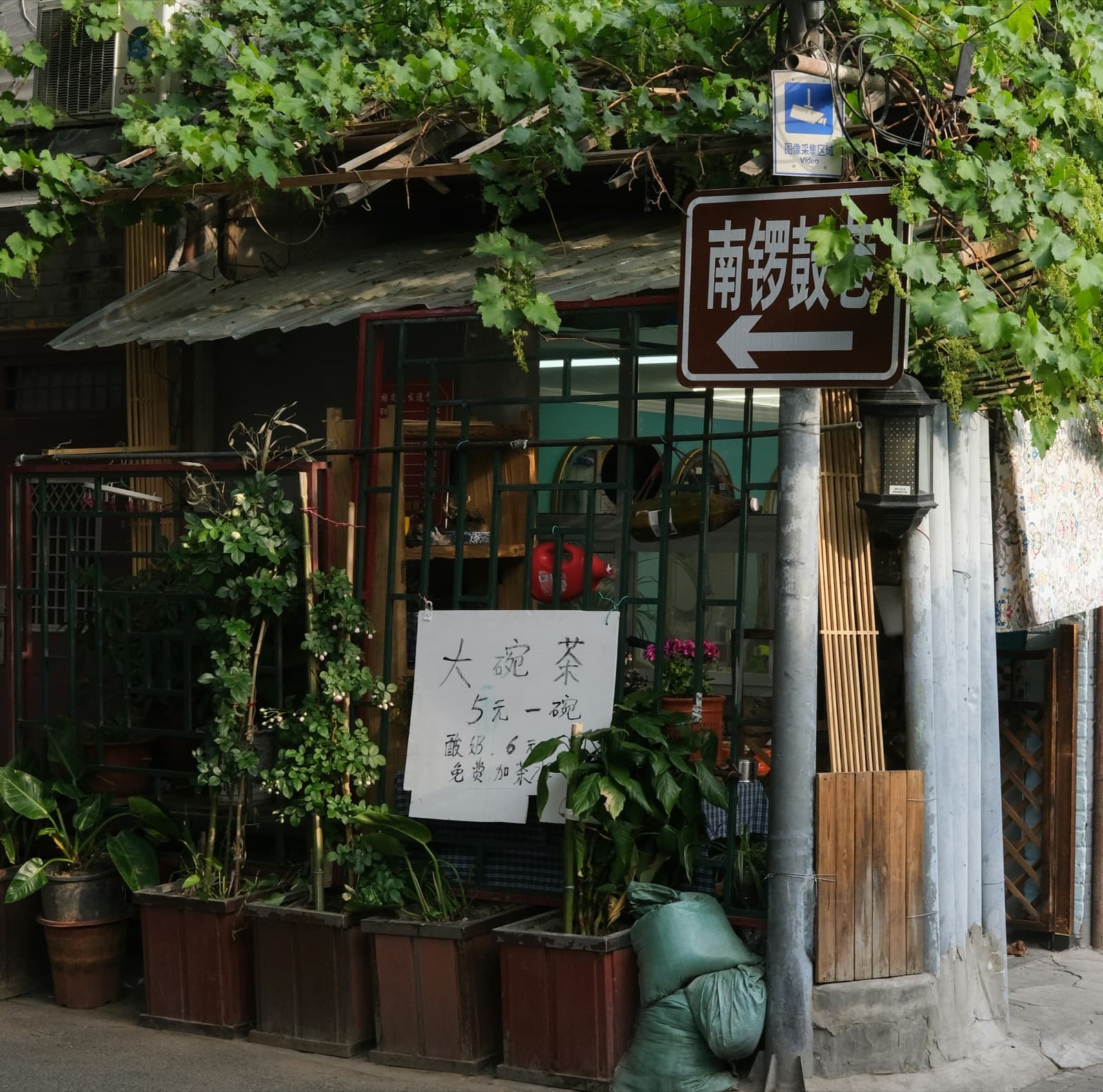
For a famous hutong, with a better way to use it
Nanluogu Xiang is an approximately 800-metre north–south hutong in Dongcheng, with a surrounding grid of much smaller lanes. The area took shape in the Yuan dynasty and retains the outline of an older residential neighbourhood, even as its main street has become packed with cafés, snack stalls, shops, and visitors. Its value is not that it is untouched—it is that it gives you an easy starting point for exploring the lanes that still branch away from the crowd.
Our advice
Walk the main lane once, then turn off into one or two side hutongs rather than spending the whole visit in the busiest stretch. Go in the morning if you want to see more street and less queue.
Pair it with: Link it with the Drum and Bell Towers to the north, or finish toward Shichahai to the west.
Time: Allow 45–90 minutes, depending on the side streets you explore.
Plan this stop
The lane itself is free to walk; cafés, shops, and small attractions operate independently.
Beihai Park
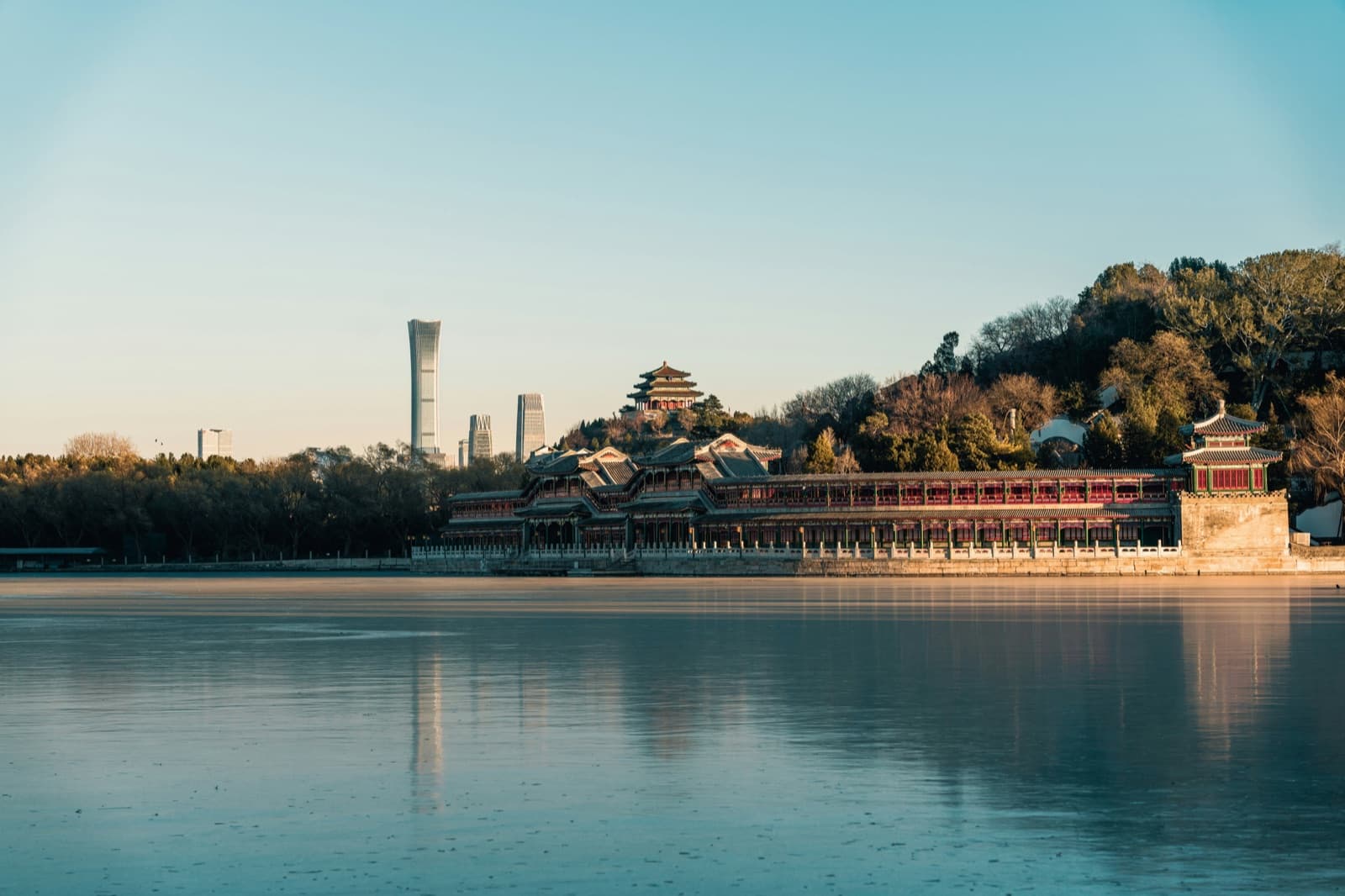
For an imperial garden that belongs in a walk
Beihai Park is one of Beijing’s oldest surviving imperial gardens, built around a large lake northwest of the Forbidden City. Its landscape follows a classical garden idea of one lake and three hills, with the White Dagoba on Jade Flower Island as its most recognisable landmark. The park carries traces of the Jin, Yuan, Ming, and Qing periods, but it works especially well today as a calm, green counterweight to the surrounding city.
Our advice
Enter with one or two sights in mind—Jade Flower Island, the White Dagoba, or the Nine-Dragon Wall—then leave time to sit by the water. Do not try to combine it with a full Forbidden City visit on the same afternoon.
Pair it with: Use it as the southern finish to a Shichahai or Nanluogu Xiang walk, or visit it after Jingshan on another day.
Time: Allow 2–3 hours, longer if you take a boat or climb the island.
Plan this stop
Beihai is a municipal park. Check the official park service for the current reservation and entry arrangement.
Slower and more contemporary Beijing
These are not “optional extras.” They are where a second or third day begins to feel less like a textbook and more like a city with several different tempos.
The Drum and Bell Towers

For an old-city district that younger Beijing still uses
At the northern end of Beijing’s Central Axis, the Drum and Bell Towers once marked the hours for the capital across the Yuan, Ming, and Qing dynasties. Their timber structures stand above a dense, low-rise neighbourhood of lanes and courtyards, giving this part of the old city a much more intimate scale than the palace district. Today, the streets around them are also part of contemporary Beijing’s social life: a place to meet for coffee, wander between small shops, take photographs, or continue toward drinks by Shichahai. The point is not modern architecture, but a historic district that remains actively used.
Our advice
Use the towers to give your walk a beginning, then follow the side lanes at an unhurried pace. You do not need to find every famous address; leave enough time to see how a historic neighbourhood works as part of present-day city life.
Pair it with: Walk toward Shichahai or nearby lanes afterwards; do not treat this as a bus-tour stop.
Time: Allow 2–3 unhurried hours with the walk.
Plan this stop
Use the visitor portal to check current opening details before you go; the neighbourhood walk itself needs no advance ticket.
Lama Temple
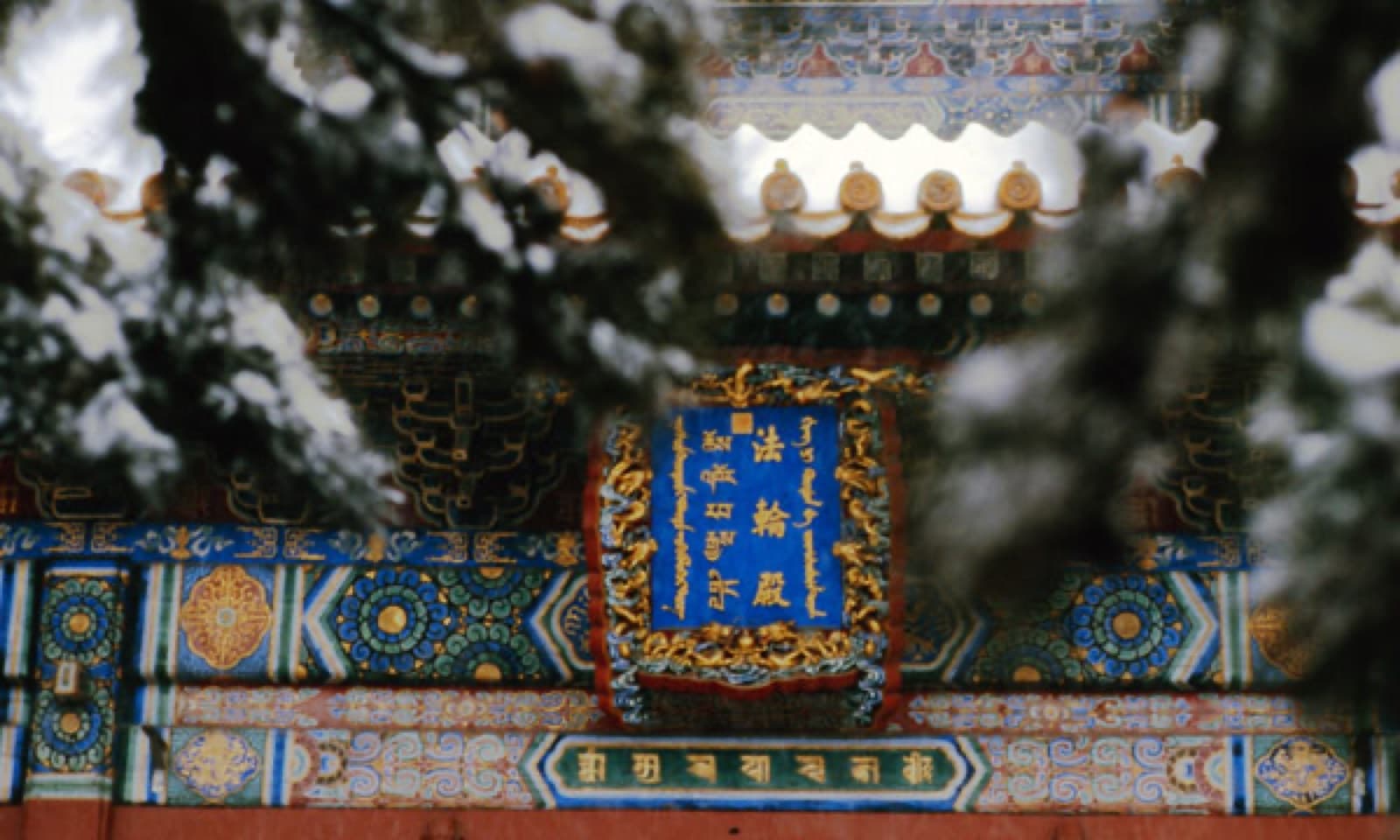
For a living spiritual side of contemporary Beijing
Lama Temple, also known as Yonghegong, began as a Qing imperial residence before it became a Tibetan Buddhist temple in the 18th century. Its sequence of courtyards and halls combines imperial-scale architecture with Tibetan Buddhist art and practice, while yellow and green tiles, carved stone, and incense-filled spaces signal its continuing religious role. It is also part of a very current Beijing ritual: many younger visitors come to light incense, make a wish for work, love, health, or peace of mind, and seek a little good fortune amid the pressures of city life. This is not a museum-like monument; it remains an active place of worship.
Our advice
Treat it as a working temple, not a backdrop. You may see people making personal prayers or buying blessed items, so keep a respectful distance and avoid photographing worshippers. Visit at a quieter pace and avoid pairing it with an overfull sightseeing schedule.
Pair it with: Combine it with the nearby Confucius Temple area or a slower lunch, rather than another marquee sight.
Time: Allow 1½–2 hours.
Plan this stop
Check the temple’s official notice before travelling, especially around major holidays.
798 Art District
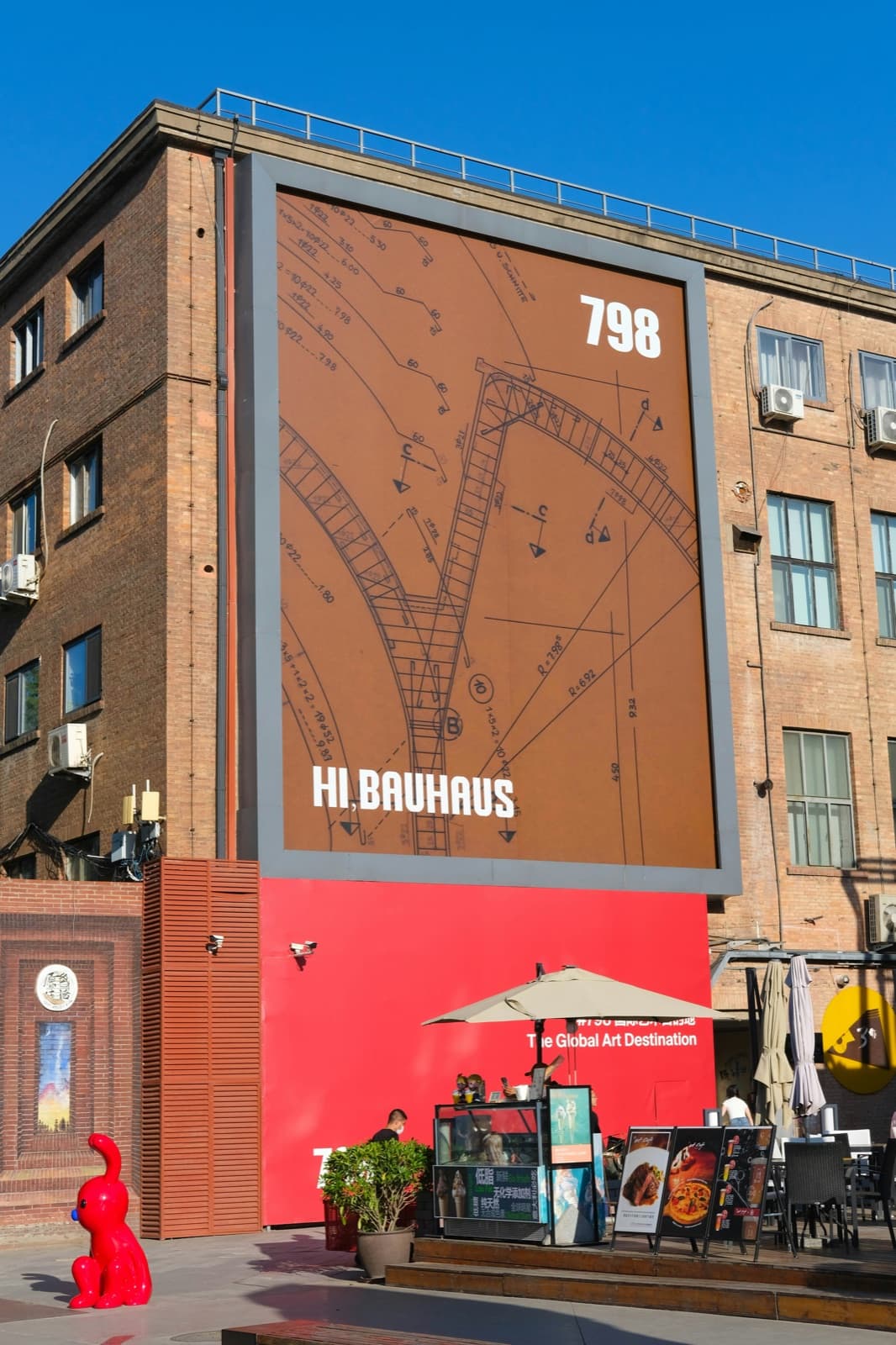
For contemporary Beijing, not imperial Beijing
798 Art District occupies a former factory complex in northeast Beijing, where 1950s industrial buildings have been adapted into galleries, studios, bookshops, cafés, and design spaces. The original Bauhaus-influenced architecture—sawtooth roofs, broad windows, concrete structures, and traces of old slogans—gives the district a visual language that is entirely different from imperial Beijing. It is one of the city’s clearest introductions to its contemporary creative life.
Our advice
Choose one exhibition you actually want to see and build the afternoon around it. The district is strongest when you let curiosity, rather than a checklist, decide the next turn.
Pair it with: Give it an afternoon and leave room for one exhibition or a long coffee rather than racing through every lane.
Time: Allow 2–4 hours, depending on exhibitions.
Plan this stop
The district itself is generally free to enter; individual galleries and shows set their own admission terms.
Sanlitun
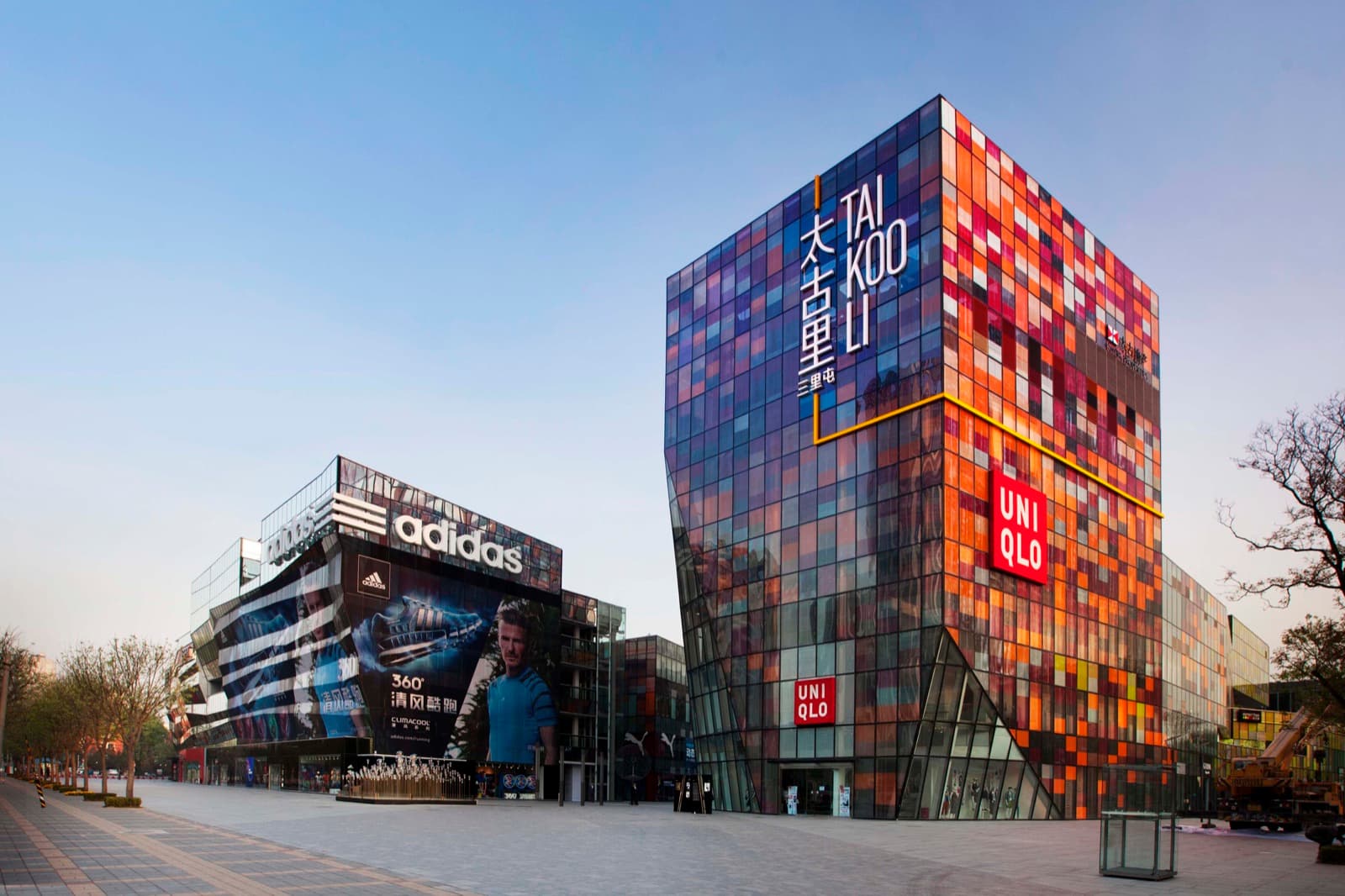
For the international, after-dark side of Beijing
Sanlitun is a commercial and embassy-area district east of the old city, best known for fashion, restaurants, bars, and the open-air retail complex Taikoo Li. It is not a historic sight, and that is precisely the point: the neighbourhood offers a view of Beijing as a fast-moving, international capital rather than an imperial one. It is also one of the easier places to spend an evening when you want choice rather than a fixed cultural itinerary.
Our advice
Come after 5 pm, when the area makes more sense as a place to eat, browse, and people-watch. Choose one restaurant or bar in advance; otherwise the amount of choice can turn a relaxed evening into indecision.
Pair it with: Make it an evening after 798, or keep it as a separate dinner-and-drinks destination.
Time: Allow 2–4 hours, depending on dinner and nightlife plans.
Plan this stop
Sanlitun is an open district; reserve individual restaurants, bars, or events directly when needed.
Leave the central grid on purpose
Both of these deserve their own day. They are rewarding precisely because you stop trying to make them fit a central-Beijing schedule.
The Summer Palace
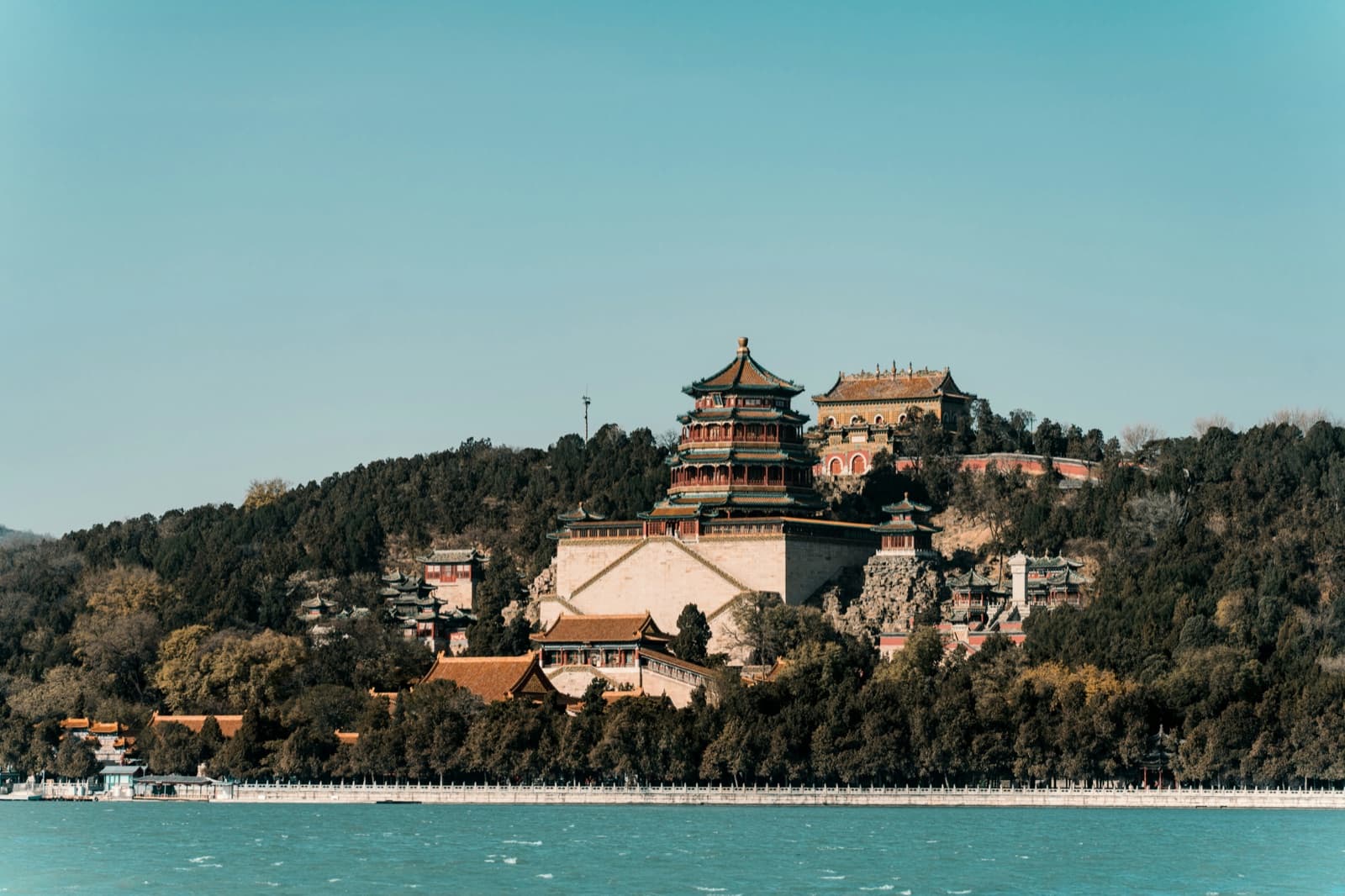
For a day with water, gardens, and walking
The Summer Palace is a Qing imperial garden built as a landscape rather than a single palace building. Kunming Lake, Longevity Hill, the Long Corridor, pavilions, bridges, and temples are arranged to make water and hillside the main experience. It was a royal retreat, but it feels deliberately open: the best of it is the changing view between architecture, trees, and lake rather than one headline sight.
Our advice
Pick one direction and resist trying to cover every corner. A lakeside walk and time on the Long Corridor will give you a better day than racing between every named pavilion.
Pair it with: Make it the main commitment of the day. Do not add the Forbidden City or central hutongs afterwards just because they look close on a map.
Time: Allow at least 3–4 hours.
Plan this stop
The official municipal-park service provides online ticketing; bring the passport used for your booking.
Mutianyu Great Wall
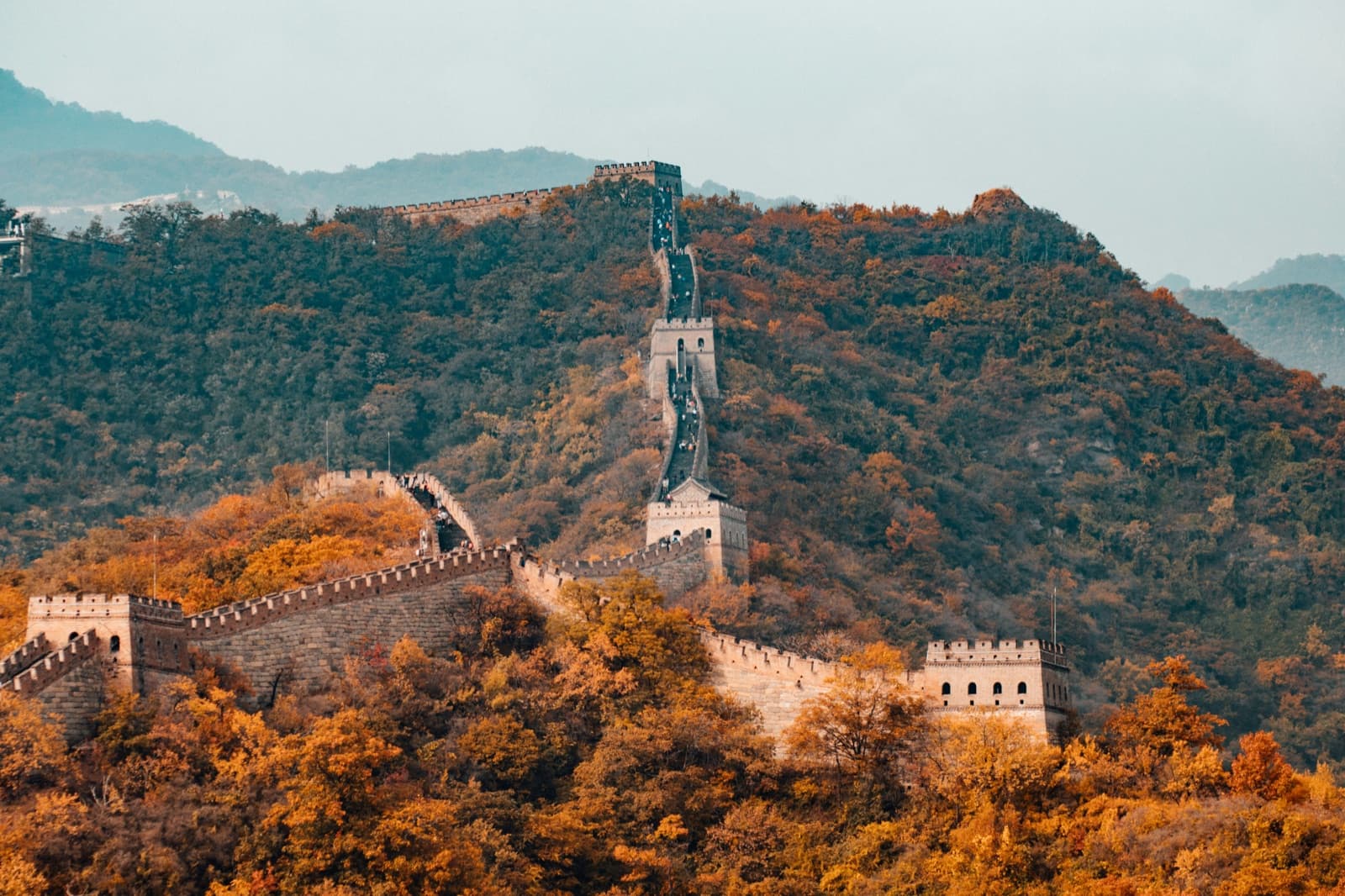
For the day you leave the city behind
Mutianyu is a restored Ming-era section of the Great Wall in the mountains northeast of Beijing. Its stone walkway follows the contours of the ridges and is punctuated by closely spaced watchtowers, so the experience is as much about the landscape and the climb as the wall itself. Compared with a city monument, it gives you a sense of how the wall used terrain, distance, and elevation as part of its design.
Our advice
Buy the ticket before you set off and check the weather the evening before. Wear shoes you would trust on steep, uneven steps; the best part of the day is walking beyond the first crowd.
Pair it with: Do not add a major Beijing museum or palace visit on the same day.
Time: Allow most of a day from central Beijing.
Plan this stop
Use the scenic area’s official English reservation centre. Cable car, ropeway, and slide options are separate from basic entry.
Read the Mutianyu tickets, routes & transport guideA realistic first three days
Day one
Forbidden City, Jingshan Park, then a quiet dinner nearby. Leave the rest of the evening unplanned.
Day two
Temple of Heaven in the morning, then choose a city walk through Nanluogu Xiang, Shichahai, or Beihai Park later.
Day three
Make a clear choice: Summer Palace for gardens and city life, or Mutianyu for the Great Wall. Each is a full day.